
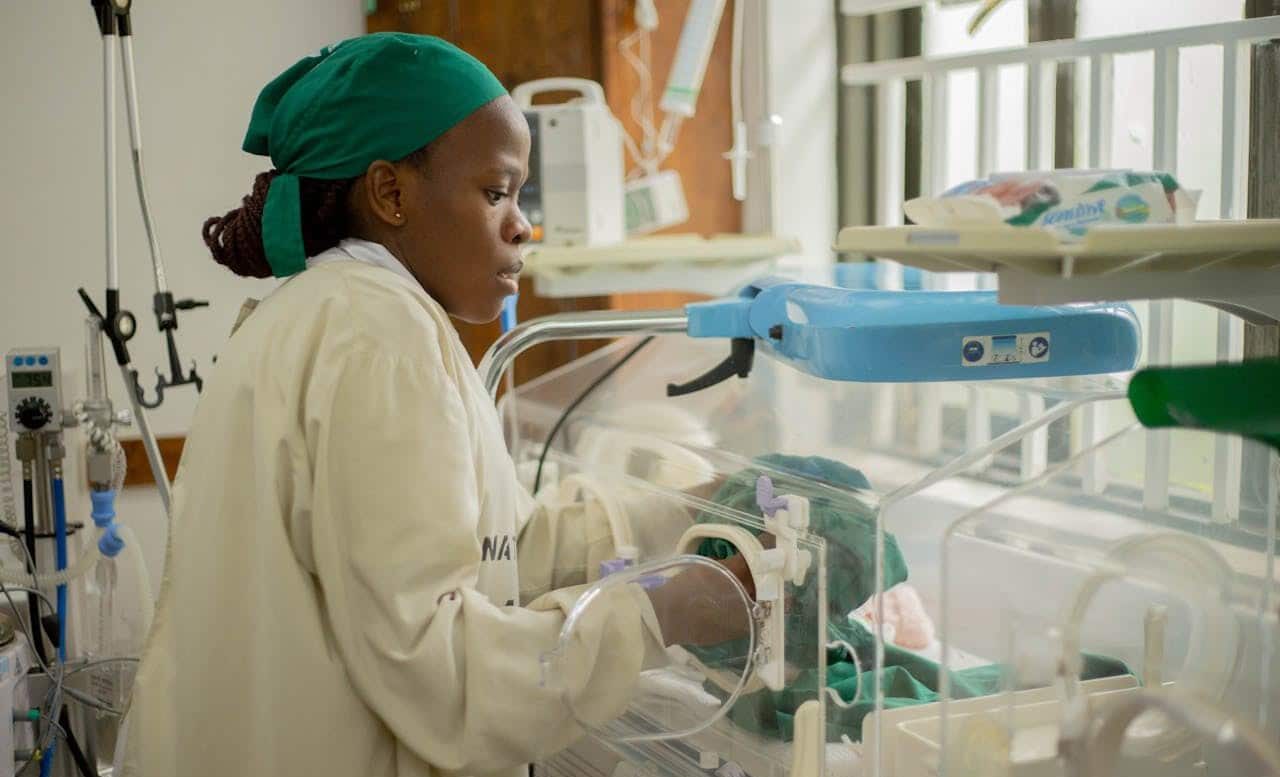
Every Second Counts: Bridging the Data Gap in Neonatal Care
In neonatal intensive care units (NICUs), clinical decisions are often made in seconds. Premature and critically ill infants can deteriorate rapidly; for instance, a sudden drop in oxygen saturation or a spike in heart rate can signal the onset of sepsis or necrotizing enterocolitis (NEC) before physical symptoms even manifest.
For health systems, these moments also carry many financial implications. Recent billing data indicates that the average cost of a single day in the NICU can reach approximately $3,181, with the total cost for a full infant stay averaging over $75,700.
When clinicians lack immediate access to complete patient data, delays in recognition introduce measurable operational and financial consequences.
Patient monitoring systems are designed to capture and display physiological data, enabling clinicians to detect early signs of instability and respond quickly. However, in many healthcare environments, monitoring data remains fragmented across devices, delayed in availability, or difficult to interpret in context.
Sickbay addresses this challenge by enabling continuous data capture and delivering a unified, near real-time view of patient data across the health system.
The Problem with Traditional Patient Monitoring
Despite advances in medical technology, many monitoring environments still rely on systems that were not designed for integrated, system-wide visibility. These limitations create gaps in awareness and introduce risk in high-acuity settings.
Fragmented Data Across Multiple Systems
In many hospitals, patient data is generated by a wide range of devices, including telemetry monitors, ventilators, infusion pumps, and neurological monitoring systems. These devices often operate independently, each with its own interface and data structure.
This lack of aggregation of disparate device data forces clinicians to move between systems to piece together a complete picture of the patient. The result is fragmentation that slows interpretation and limits clinical confidence.
Delayed Clinical Visibility
Even when data is being captured continuously, it is not always accessible in a centralized or timely way. Clinicians frequently experience delayed access to monitoring data, particularly when transitioning between care environments or systems.
Instead of a continuous stream of patient data, clinicians are often working with intermittent snapshots. This lack of continuous visibility increases the risk of missed trends and slows clinical response.
Alarm Fatigue Without Context
Alarm fatigue remains a persistent challenge in critical care environments. Monitoring systems generate a high volume of alerts, many of which lack actionable significance.
Without access to longitudinal data trends, alarms are evaluated in isolation rather than within the context of a broader clinical trajectory. This contributes to desensitization and increases the likelihood of delayed or missed responses.
Limited Ability to See the Full Patient Picture
Traditional monitoring systems often make it difficult to connect data across time and modalities. Clinicians may lack access to multimodal monitoring data in a single, unified view.
Without longitudinal insight, subtle changes in patient condition can go unnoticed. This limits the ability to detect early signs of deterioration and reduces the effectiveness of monitoring systems overall.
Why Continuous Patient Monitoring Improves Clinical Decision-Making
In this setting, fragmented data creates significant risk. Sickbay is designed to eliminate the limitations of fragmented monitoring systems by providing a centralized, continuous view of patient data across the health system.
Continuous patient monitoring transforms data from isolated measurements into a dynamic, evolving picture of patient health. High-resolution waveform data allows for the development of deep learning models that can predict cardiac arrest with higher accuracy. Integrating continuous data into machine learning models can help predict a neonate’s length of stay (LOS). During shift changes, teams can review the last 12 hours of high-resolution data in minutes, ensuring no subtle trend—like a creeping baseline heart rate—is missed in verbal communication.
This level of visibility using platforms like Sickbay supports more accurate risk stratification, enabling care teams to identify high-risk patients earlier and prioritize interventions accordingly.
When clinicians have access to continuous, contextualized data, they can intervene sooner, reduce complications, and ultimately improve patient outcomes. The impact extends beyond clinical care, supporting more efficient workflows, better resource allocation, and improved operational performance. Learn more about patient monitoring strategies on our website.
How Clinicians Are Using Sickbay in the NICU
The NICU is one of the most data-intensive and time-sensitive environments in healthcare. Infants in the NICU often require continuous monitoring across multiple systems, with rapid changes in conditions that demand immediate attention.
Sickbay enables clinicians to access a unified, continuous view of patient data, supporting faster recognition of subtle physiological changes. By consolidating data from multiple devices, clinicians can understand not just individual signals, but the broader clinical picture.
For a neonatal Intensivist, the ability to prove that a procedure is safe for a fragile infant is paramount. Dr. Jack Wren used Sickbay to validate the safety of early neonatologist-performed echocardiograms (NPE):
“In medicine, we want to see data to prove that something works. We utilized Sickbay to provide trends of real-time vital sign monitoring… I could essentially show in real-time that you have a tracing of the vital signs and say ‘ECHO start here, ECHO end here.’ Because I could see the heart rate, blood pressure, and oxygen levels were a straight line, we had the evidence to prove we weren’t causing clinical instability by doing the ECHO early.”
Beyond research, this data-first approach transforms daily workflow. The intensivist noted that because faculty offices are often located away from the NICU, the ability to pull a second screen and monitor trends remotely has become an essential tool for real-time management.
You can also watch our recent Stories from the Field session here with Dr. Lindsey Knake, Associate Chief Medical Information Officer at the University of Iowa. We discussed how high-fidelity physiologic data is changing the landscape of the NICU. Dr. Knake emphasizes that while electronic health records provide a snapshot of care, they often lack the granularity required for the most critical cases.
As both a clinician and an engineer, Dr. Knake values the ability to “trust but verify” care decisions through sub-second waveforms. This level of insight allows her to support her team remotely and intervene at exactly the right moment during the crucial first 36 hours of a premature baby’s life. Her focus remains steadfast on human outcomes, specifically finding ways to safely transition babies off mechanical ventilation to prevent chronic lung disease.
This episode highlights the intersection of expert guidance and a deep commitment to patient well-being.
See Continuous Patient Monitoring in Practice
In high-acuity environments like the NICU, speed, continuity, and clarity are essential. Fragmented systems and delayed data create risk, while unified, continuous monitoring enables faster, more confident care.
Sickbay enables continuous, streaming patient monitoring and a unified view of clinical data across your health system.
Schedule a demo to explore how your organization can improve patient outcomes, strengthen clinical visibility, and unlock the full value of your monitoring data.


